Repair or replace
Can a roof leak be fixed without replacing the roof?
Compare an isolated repair, a larger section repair and replacement using the condition of the roof around the leak.
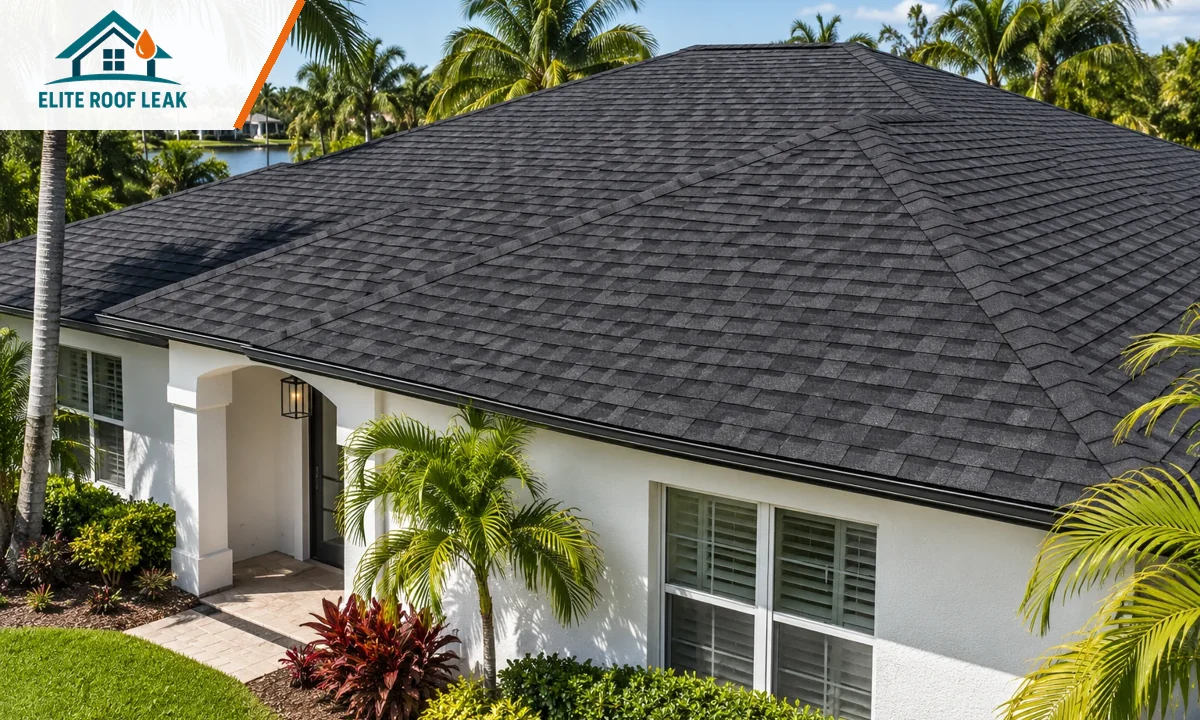
Yes. A roof leak can often be fixed when the entry point is localized and the roofing around it is sound. Consider replacement when the inspection finds widespread deterioration, several independent leaks or extensive damage under the roof covering.
Ask whether the affected area is isolated
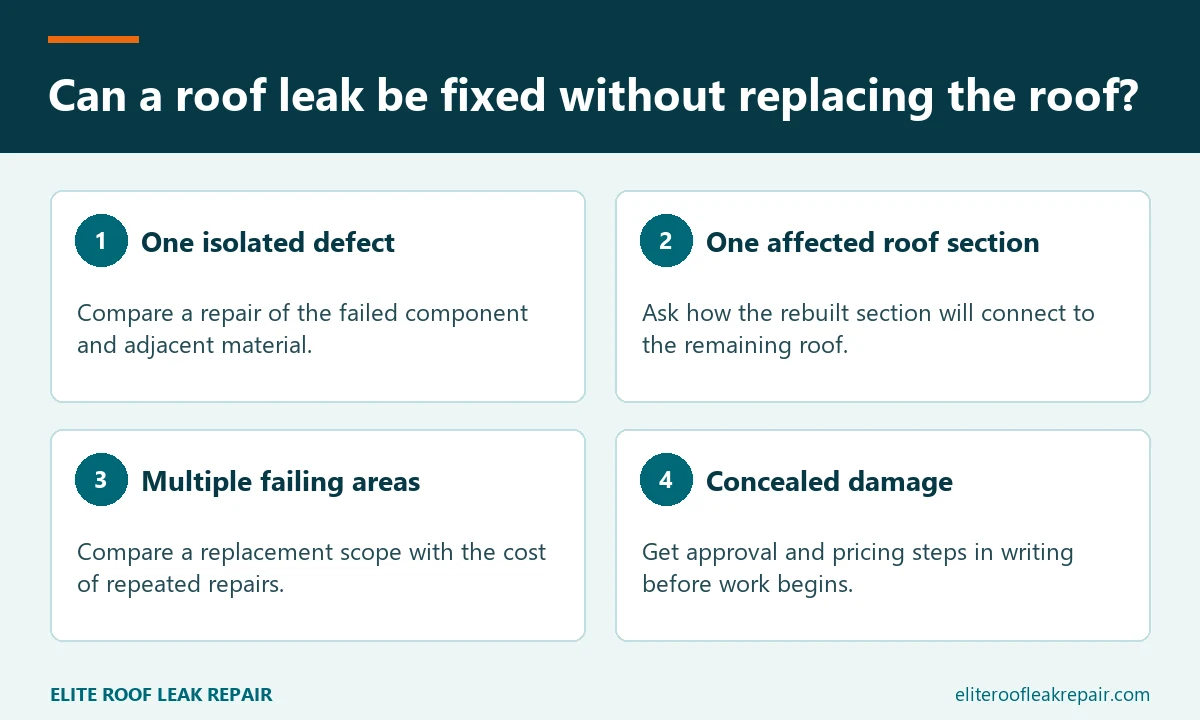
A repair makes sense when the inspection can point to a specific defect and the material around it can support the work. Common examples include a failed boot around a vent, a flashing section at a wall, a few storm-damaged shingles or an open seam on a membrane. Ask the roofer to show where the surface failed and explain how the repair joins the existing roof.
Equally important is the material the crew needs to disturb to reach the defect. A small opening may be surrounded by shingles that have become brittle or tile that is difficult to match. If removing those pieces would break more material, the workable area can be larger than the visible leak. Ask which neighboring components will need to be lifted, replaced or left in place.
Look at conditions across the roof
Widespread wear changes the repair decision even when a single stain prompted the call. The inspector may find deterioration at several vents, loose surface materials across different slopes or moisture near multiple ceiling marks. Ask whether the conditions share a single cause, such as a drainage path, or indicate different points of failure.
Review the findings by roof section. If the front and rear slopes show different conditions, ask the roofer to explain the likely reason. An addition could be newer or use a different material, and a sheltered slope may look different from one exposed to wind. Documenting these differences gives you a way to compare an estimate covering one section against a proposal for the whole roof.
Ask how the roofer will handle hidden damage
A complete view of decking and underlayment may require removing some roofing. A written proposal can set expectations before that happens. Ask what visible evidence points to concealed damage, what the crew will document if it finds more and how it will request your approval. Confirm whether pricing is included, based on a unit price or left for a written change.
For example, a proposal to replace flashing at the base of a wall may assume the surrounding wood is sound. If that wood is soft once exposed, additional removal or replacement may be needed to give the new flashing a sound connection. Understanding the decision in advance helps you budget and lets you distinguish an ordinary inspection finding from a change to the original scope.
Compare how each option closes the water path
With a localized repair, find out what covers the opening and how water will pass around it. With a section repair, ask how the new work ties into existing underlayment, flashing, valleys or membrane. With replacement, review which roof surfaces, vents and edges are included. Each option should describe the path water will follow once the work is complete.
A lower total can reflect a smaller scope or fewer included tasks. Make a line-by-line comparison using a few categories. Look at removal, materials, underlayment, flashings, disposal and site cleanup. If an estimate lists an item as optional, ask when it becomes necessary. A conversation about specific tasks makes the price easier to understand than a comparison based on roof size alone.
Consider the roof's repair history
Keep a list of earlier repairs, including the date, location, company and material if you know them. If you have photos or an invoice, bring them to the inspection. A leak that returns after a patch near the same detail can mean that the original defect was difficult to reach, the new wet spot has a different source, or nearby material has changed.
A history of repairs in separate areas is a useful piece of evidence when comparing a new repair with replacement. Estimate what the proposed work is meant to resolve and ask which existing conditions remain. If the roof is otherwise sound, a targeted repair may provide meaningful service. When the rest of the roof shows similar damage, a larger scope can make more sense.
Review timing and changes with the property in mind
Ask what the property needs before the crew starts and how the work area will be protected if rain interrupts the schedule. Clarify entry, parking and how the crew will handle debris. For a home with tenants, shared walls or community rules, confirm who can approve the work and what notification the property requires.
If you are planning other work, such as a change to a vent or installation of rooftop equipment, tell the roofer. These jobs can alter the roof openings a repair touches. Confirm who will handle the connection through the roof and who should be called if water later appears there. Review any material or workmanship terms in the written quote so you know which contact is responsible for each part.
Make a decision based on the condition you can verify
Ask for photos of the defect and condition of adjacent material. Then write down what the roofer expects the repair to address, what is uncertain and what would make the recommendation change. Compare that information with any broader proposal. A healthy roof with one failed detail can lead to a different decision than an older roof with scattered leaks and inaccessible damage.
Use your local Elite Roof Leak Repair number to request an assessment. Start with your ZIP code, roof type, where the leak appears and prior work. The closer your description is to the property history, the easier it is to ask targeted questions when the written scope arrives.
Compare the terms for each scope
Read the written terms for a localized repair and any replacement proposal. You may see different coverage for new materials, installation and existing sections left in place. Ask for the names of the parties responsible for each part and for a clear description of what to do if the roof leaks again. Save the quote, approval and final invoice together. If the initial job is limited to one detail, the records can help the next inspection distinguish that work from adjacent roof sections and earlier repairs.
Questions about this guide
01Is age enough to decide whether to replace a roof?+
Age helps set expectations. Visible condition, repair history and the extent of moisture damage help determine the scope.
02Can I replace one roof section?+
A section can be an option when it can be tied into the rest of the roof and the remaining surfaces are sound.
03What is decking?+
Decking is the structural surface beneath the roof system. Its condition affects how roofing can be attached and repaired.
04How should I compare two quotes?+
Compare the areas and components included, materials, preparation, disposal and the steps for approving added work.
05What does a repeat leak tell me?+
It signals a need to revisit the earlier repair and nearby conditions. Ask the roofer to trace the water path and review the old scope.