Share the sequence
Give the local team your ZIP code, which room got wet, when it began and whether the problem depends on rain direction or intensity.
Review the roof detail
Ask which surfaces, openings or drainage paths were assessed and how those findings relate to the interior observations.
Confirm the repair boundary
Review the connection to adjoining materials and the plan for documenting any changes discovered during the work.
Compare the estimate with the suspected entry point
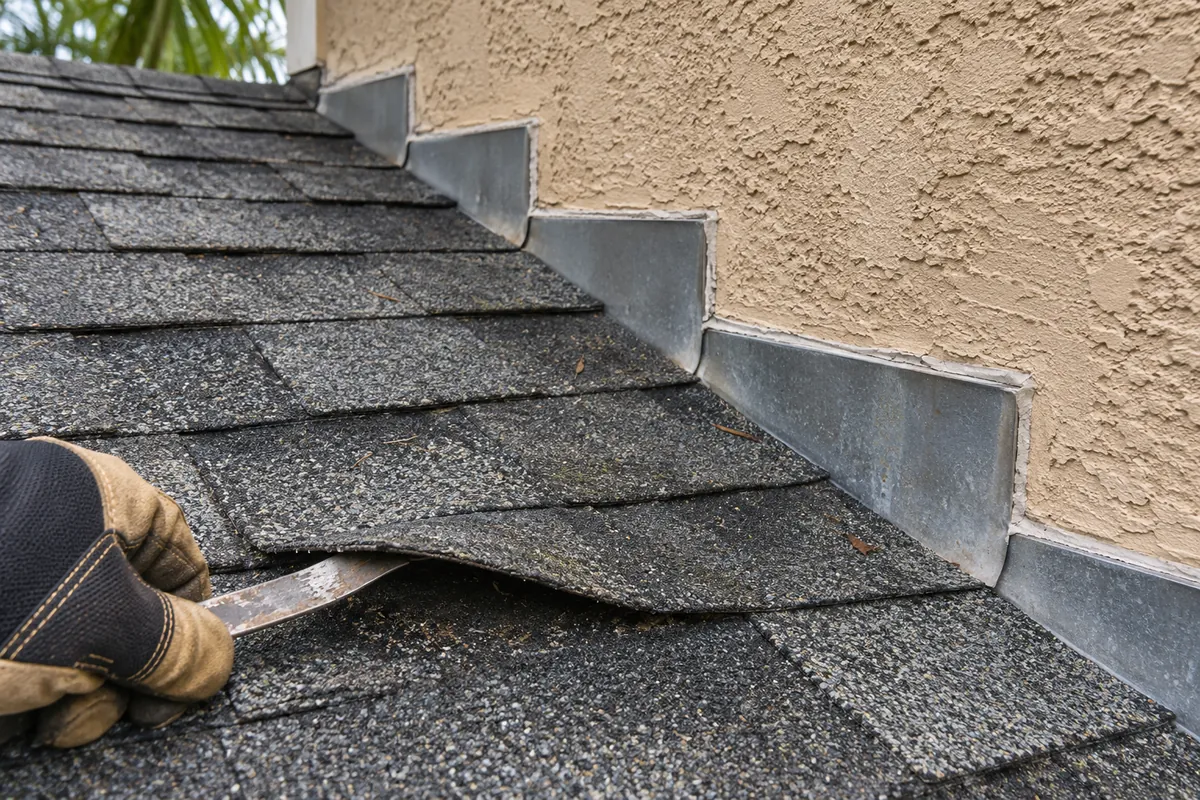
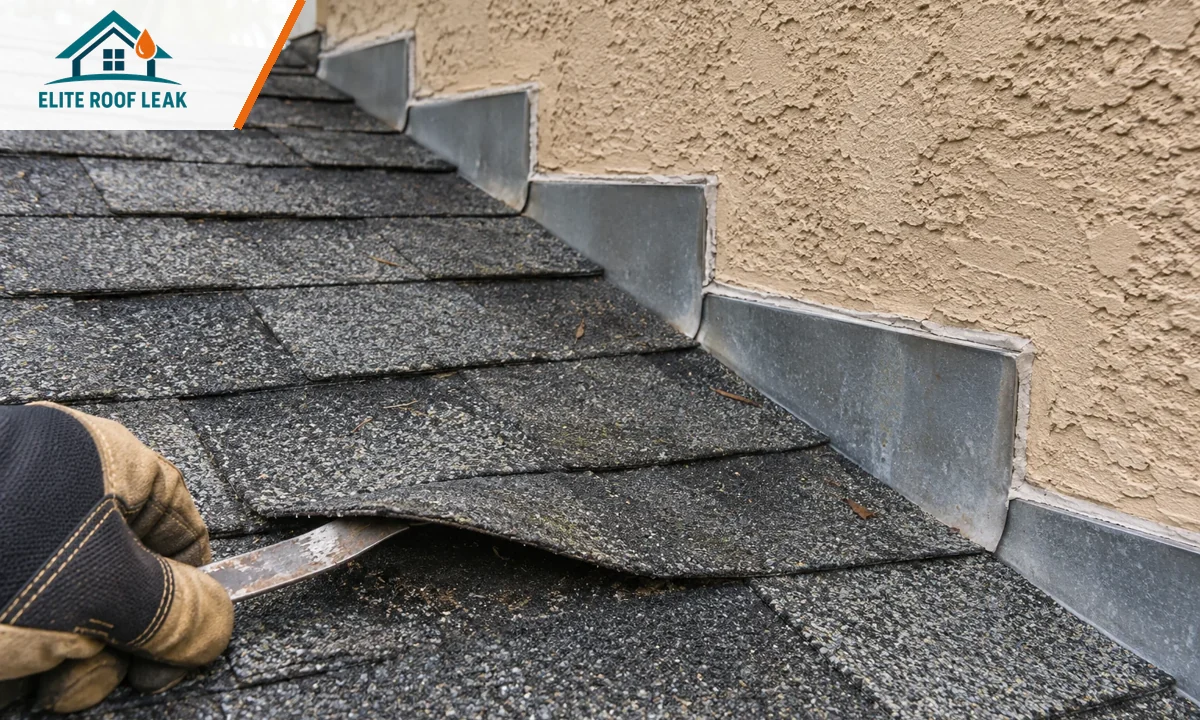
A stain below a roof-to-wall joint is a good example of why scope matters. Rain runs down the wall and along the meeting point with the lower roof. If that connection is part of the suspected water path, ask the roofer to show where the repair will begin and end. Look for a description of the wall flashing, nearby shingles or membrane and how runoff will get past the repaired area.
For a roof that has been patched before, put the earlier scope beside the new one. Note whether the new proposal covers the same opening and which additional observations changed the plan. Ask how the crew will reconnect the existing materials, what would add work, and how you can describe any further water entry after the repair.