
Roof leaks
Why is my ceiling leaking when it rains?
Use the timing, location and pattern of a ceiling leak to give a roofer a better place to start.
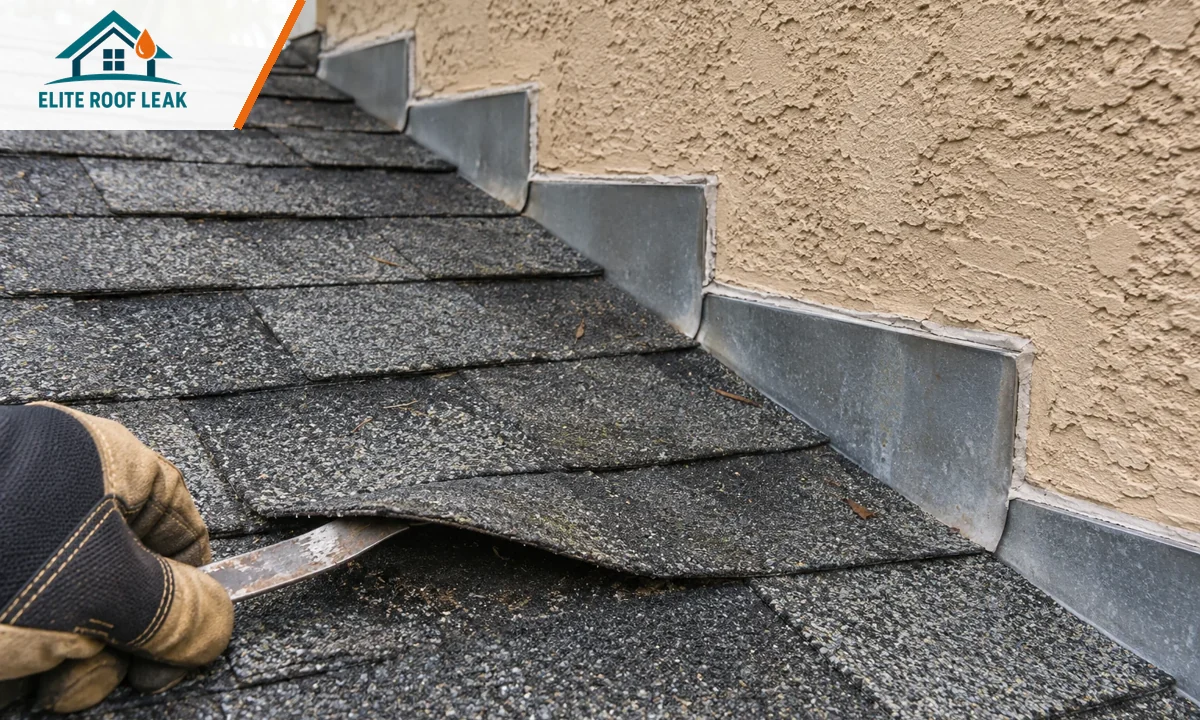
A ceiling can leak during rain when water bypasses roofing, flashing or a roof penetration and travels along the structure before dripping inside. Record where it appears and which storms bring it back. Those clues help a roofer trace the entry point.
Start with the safest information you can collect
When water starts coming through a ceiling, keep people away from the wet area. Stay clear of wet electrical fittings, dripping fixtures and sagging ceiling material. If the room is safe to enter, move possessions out of the drip path and set a container on a stable surface. If the damage is extensive, leave the affected area and get appropriate help.
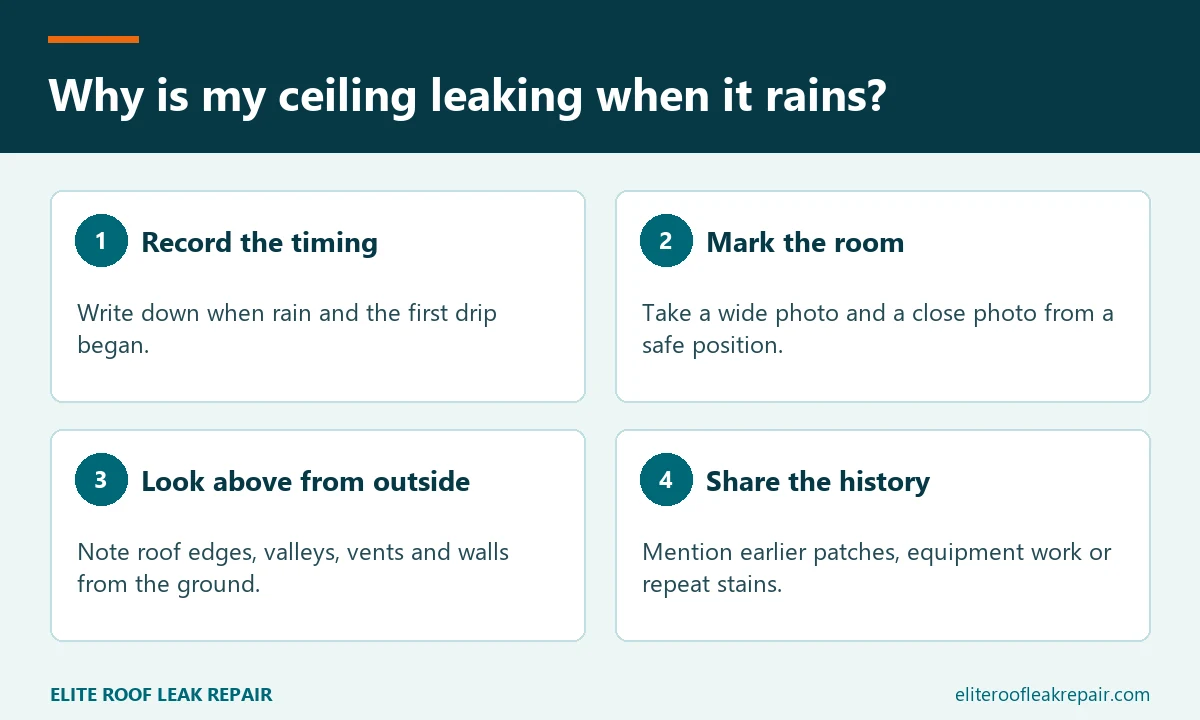
Collect observations from a dry position. Take a wide photo to show the room and a closer photo of the stain if you can do both safely. A wide photo helps orient the person looking at the roof later. Write down the date, when it started raining and how long it took for the leak to appear. Stay off the roof, including when a storm has just passed.
Trace the path from the room to the roof
Roof framing can carry water away from an opening. It may follow a board, spread through insulation or run along the top of a ceiling before showing in a room. Imagine a drip below a hallway near an exterior wall. The opening could sit farther upslope where a roof joins a wall, while the framing carries the water down to the hallway. A repair directly above the stain would miss that opening.
Use landmarks from inside and outside to orient the roofer. Count which room is affected or point out the window below the stain. If a prior inspection report shows the roof layout, have it handy. Tell the roofer if the mark crosses a ceiling joint or starts where the ceiling and wall meet. Those details help connect what you see with the shape of the roof.
Give the roofer a timeline of the rain and drip
A leak that shows up only during sideways rain can have a different cause from a stain that appears after hours of steady water. On a roof with several slopes, one direction of wind can expose an edge or wall joint that stays dry in an ordinary shower. Rain that lasts a long time can reveal a weak seam or a drainage problem on a low-slope section.
Keep a short weather log if the leak is intermittent. Note which room got wet, whether the rain was hard or light, how quickly the mark grew and whether it continued dripping after the rain stopped. Two entries from different storms give the roofer a comparison. Include dates for past repairs, roof work, solar installation or a replaced vent if those events happened shortly before the first stain.
Ask about junctions, penetrations and drainage
Different parts of the roof move and shed water differently. Where a wall meets the roof, flashing directs water past a joint. A skylight or plumbing vent needs a weather-resistant connection through the roofing. Valleys collect runoff from two slopes. An addition may have a different pitch or roofing material from the rest of the house, with a transition that needs its own detail.
The inspection should connect the suspected source to the room, weather and roof layout. For example, a stain below a vent may also line up with a nearby valley. Ask what condition the roofer saw at both spots and how the conditions affect the proposed work. A photo can be useful in that discussion because you can point to the specific piece of roofing or flashing involved.
Consider other ways water reaches the ceiling
The roof is one possibility. A plumbing line, air conditioning drain or an exterior wall opening can also send water into a ceiling. Note whether the mark grows on clear days, during use of an upstairs bathroom or when the air conditioner runs. It helps to record observations before making a change to the property, so you can compare the stain before and after that change.
A roofer can identify signs in the roof area and advise when another trade should check the property. If the cause remains unclear, ask which possibilities were ruled out and what observations would help narrow it further. A visible stain can represent old damage, recent moisture or both. The history of the mark often tells more than a single snapshot.
Review what the repair is meant to fix
A written repair scope should identify the suspected or observed entry point and the work proposed there. Ask which roofing components will be removed, replaced or reused, and what the roofer will check once the surface is open. If damp insulation, ceiling finishes or other interior materials need attention, confirm who will assess them and when.
After the repair, keep the photos and a copy of the scope. With each later storm, check from the same safe position and note any change. If water reappears, compare it with the earlier pattern and tell the roofer what you saw. A new drip near the previous stain can come from the original opening, an adjoining detail or an unrelated source, so a record gives the next inspection a useful starting point.
Make the first call specific
Start with the property ZIP code and say whether water is entering now. Describe the affected room, roof material, roof age if you know it, and whether the stain has returned after earlier work. If the roof has an addition or low-slope section, tell the team which part sits above the affected space. Mention access needs such as a tenant schedule or gate.
Keep the photos available for the inspection. Write down the questions you want the roofer to answer, including what the likely entry point is, how it can be addressed and what would change the scope. This makes it easier to compare a localized repair with any broader option if the inspection finds additional damage.
Agree on when to follow up
Ask what to do if the first post-repair rain produces a mark in another room. A simple follow-up plan lets you share the new location and weather information while it is fresh. Keep the contact number and original scope nearby to avoid reconstructing the details later.
Questions about this guide
01Why is the stain far from the roof leak?+
Water can travel along framing, insulation or the ceiling surface before dripping into the room.
02Can a roof leak stop when the wind changes?+
Yes. Rain from different directions can expose different roof edges, walls and joints.
03Should I climb up to look for the source?+
Stay off a wet or damaged roof. Photograph visible conditions from a safe place and ask a roofer to inspect it.
04Does a new ceiling stain mean I need a replacement?+
A stain alone cannot establish roof condition. A roofer should identify the entry point and evaluate nearby material.
05What if the stain grows on a clear day?+
Record when it grows and whether plumbing or air conditioning was in use. Share that information so the right trade can investigate.