Roofing estimates
What should a roofing estimate include?
Compare written roof proposals using scope, materials, site preparation and decisions about concealed damage.
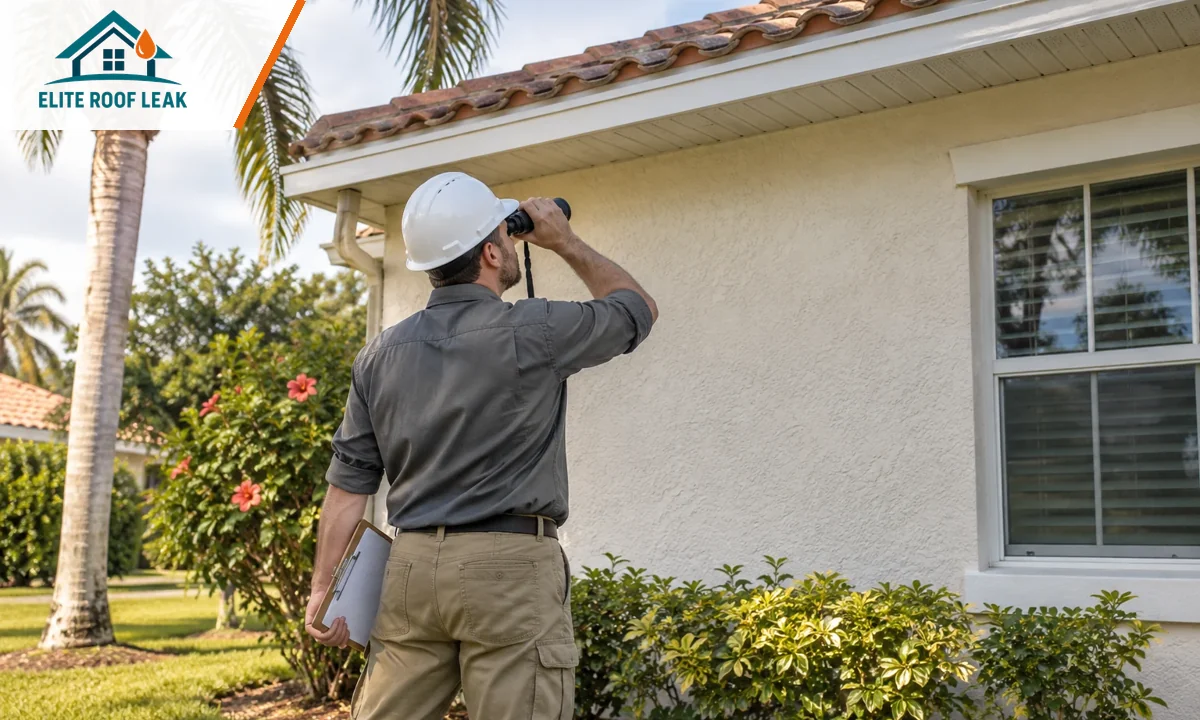
A roofing estimate should identify the roof sections involved, the proposed work and materials, site preparation, cleanup, exclusions and price. It should explain how the contractor will document and price extra work if hidden damage appears.
Start with the roof areas being priced
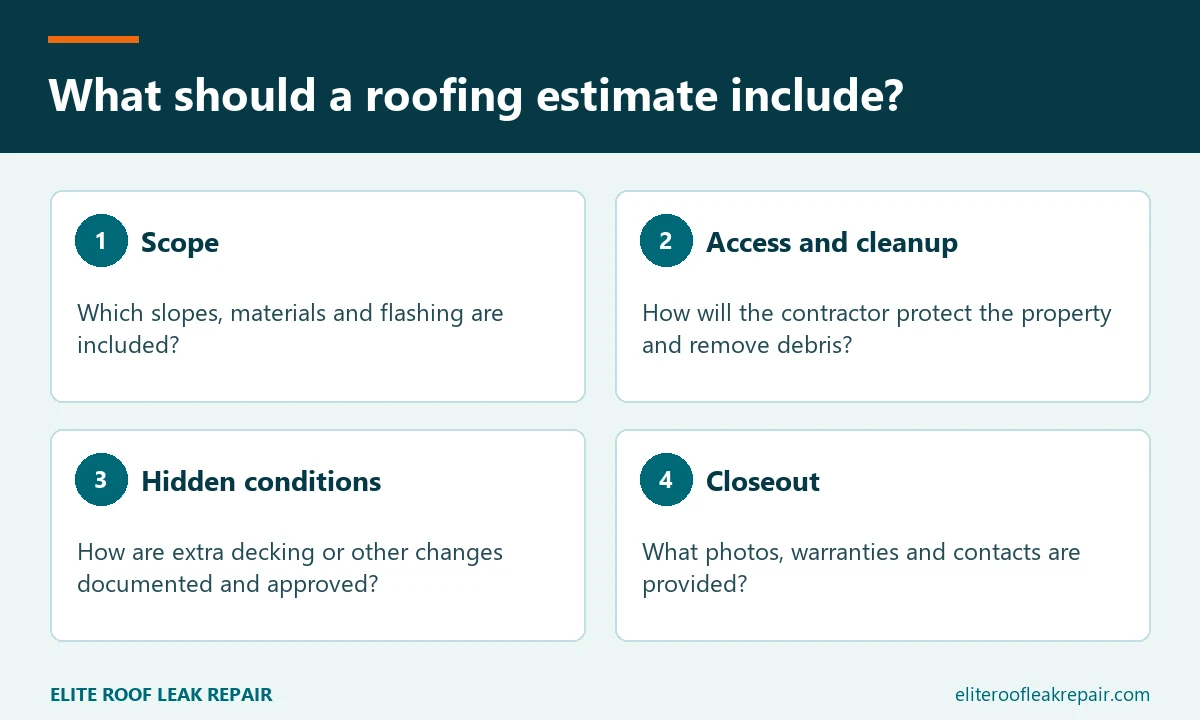
Ask the contractor to identify which surfaces the proposal covers. A house may have a main roof, a patio, a garage and a lower roof above an addition. A phrase such as complete roof replacement can have different meanings if one of those sections uses a different material or serves a shared part of the property. Read the roof area description and match it to the actual structure.
For a repair, ask the contractor to describe the symptom, suspected cause and proposed repair location. A line such as repair leak gives little information about the work involved. Ask which flashing, roof section or penetration will be addressed. The description should give you enough information to determine whether another quote covers the same problem.
Identify the materials and connection details
Review the proposed roof covering and any underlayment, membranes, vents or edges listed. Ask which existing parts will stay in place and what the roofer will install or replace. On some homes, a lower roof meets a wall or a higher roof at a transition. Ask how the materials will connect where the surfaces change. Water should have a defined path from the top of the roof to the outlet or ground.
Ask about color, finish and product line where appearance affects the decision. With a repair, the available material may differ from what is already on the roof. If two estimates specify different materials, ask each contractor why the proposed product fits your roof. Where the proposal includes a resilience feature or certification, confirm exactly what is included and who documents it.
Ask what happens when the surface is opened
A contractor can describe visible roof conditions before the job starts. Concealed conditions may become apparent once materials are removed. Ask how the company will document damaged decking, deteriorated supports or unexpected repairs at walls. Review who will notify you and how you will approve the change. Look for a unit price if the amount may only be known during the work.
For example, one proposal might include a stated number of decking sheets and a per-sheet charge beyond that quantity. Another might list decking separately once the roof is open. Comparing the two requires asking what is included in the starting amount and when written approval is needed. Record the answer so you can compare scopes with the same assumptions.
Review property protection and timing
Ask where materials will be staged, how workers will access the roof and how debris will be removed. Clarify whether the crew needs access to the attic, a side yard or a shared drive. If you have pets, a gate code, tenants or limited parking, discuss those details before agreeing on a schedule. Ask how the contractor will leave the area between workdays.
Discuss weather delays and how unfinished roof areas will be protected. Ask what happens if heavy rain is expected while removal is underway. Confirm whether the start date is an estimate or a firm scheduling commitment under stated conditions. A written plan can help you coordinate deliveries, tenant access and your own availability without guessing how long each stage will take.
Compare prices using matching scopes
Make a short list of the items that should appear across quotes. Include removal, roof covering, underlayment, flashing, vents, debris handling, cleanup and any adjustments for access. Mark which items are included and which require clarification. Ask whether taxes, fees, or any permits required for the property are included in the quoted amount, and confirm responsibility with the contractor.
A lower number can reflect a narrower set of tasks or a different starting assumption about repairs. Ask how the estimate treats exclusions and optional work. Compare the payment schedule alongside the total. The written quote should let you see which stages trigger payment and who will approve changes. Keep the accepted scope with any photos and messages that explain how decisions were made.
Plan for the review after the work
Ask what will happen at the end of the job. Confirm how the team will review the work, share photos and handle leftover debris or supplies. Request copies of the material information and any written terms that apply. If a warranty is offered, ask whether it covers the material, the installation or both, and which party handles a claim.
Keep the estimate, approved changes and completion documents together. If the roof later develops a new symptom, those records help you explain exactly which areas were worked on and what remains original. Identify the person or local office to call after the job. Discuss whether the property owner should take any steps to maintain the materials and how the schedule fits the roof system.
Prepare for a useful estimate conversation
Share the ZIP code, roof age if known, what you notice and any inspection reports or past repair invoices. If a ceiling stain is the reason for the call, photograph it from a safe spot and write down when it appeared. Have questions ready about the cause, available repair options and findings that could change the work.
A good quote conversation is easier when you can describe what you want to compare. For example, ask whether the contractor can show the condition of the material around a leak and describe how a localized repair would connect to it. If you already have another proposal, compare categories and assumptions. Written scopes make it easier to decide which work suits the property and when more inspection is needed.
Keep your own comparison notes
Write down the questions each estimate leaves open. Before signing, ask the contractor to put any agreed answers into the scope. A short list of decisions can prevent misunderstandings about roof sections, timing and who approves extra work after the crew starts.
Insurance Institute for Business & Home Safety FORTIFIED Roof overview ↗
Questions about this guide
01Should a roofing estimate identify the location of the work?+
Yes. Ask for the affected slopes, edges, materials and adjoining sections in the written description.
02Should decking be listed separately?+
Ask what decking work is included and how any added quantities will be priced and approved.
03How do I compare warranties?+
Read who provides each warranty, what it covers, the conditions and whom to contact.
04Who handles a weather delay?+
Discuss how the crew will protect unfinished areas and when the contractor will confirm a new schedule.
05What should I have ready for the estimate?+
Provide the address or ZIP code, the roof's age and material if known, symptoms and prior work records.