
Storm damage
What should you do after a storm damages your roof?
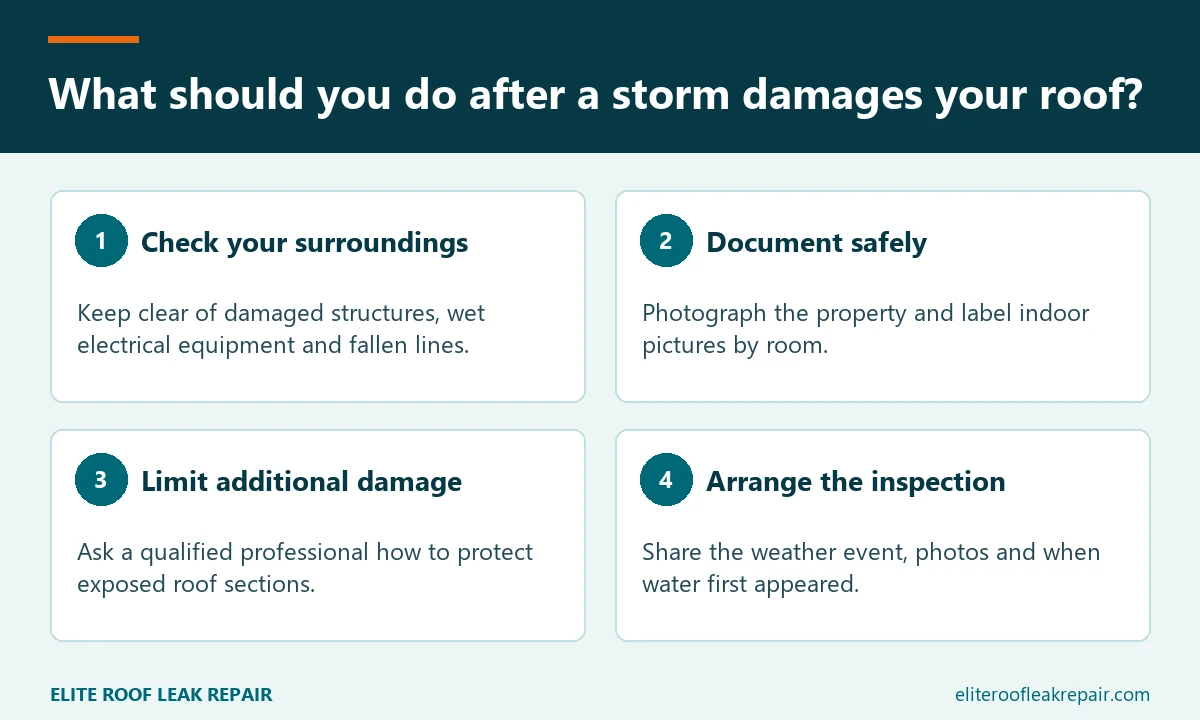
Document visible storm damage from a safe position, limit further water entry and prepare for a professional roof inspection.
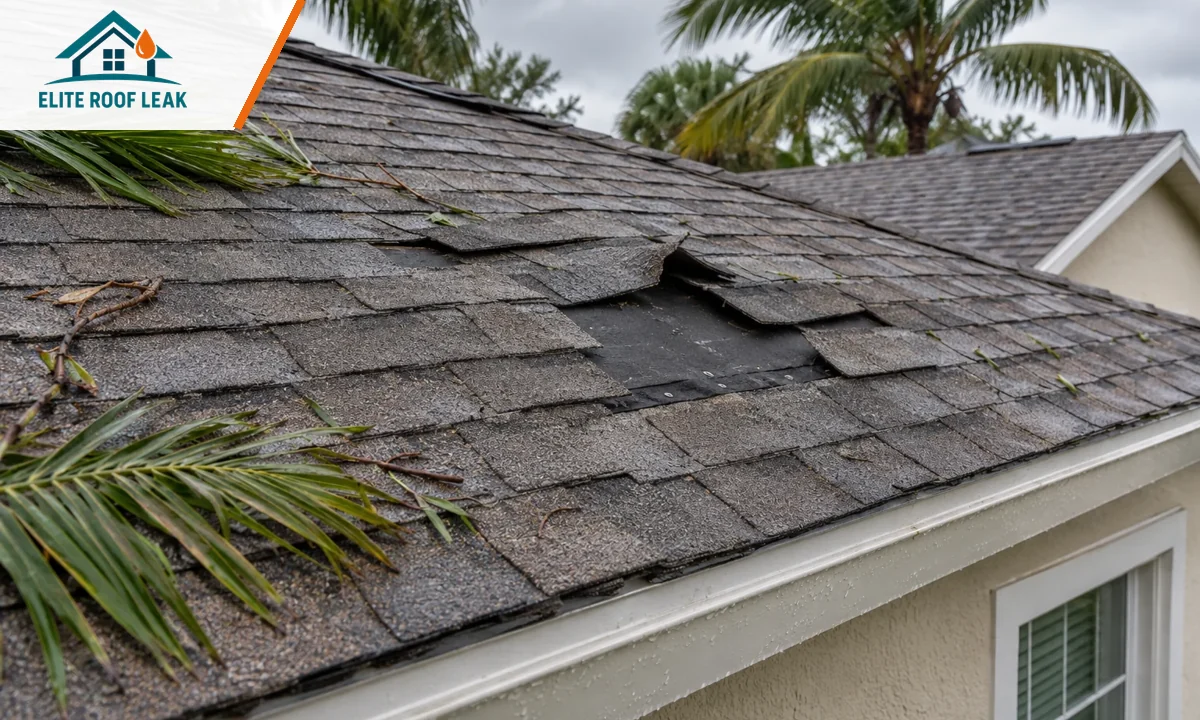
Stay clear of hazardous areas, record what you can see from a safe place and arrange a roof inspection. Contact your insurer if you plan to report damage and keep photos, dates and receipts together.
Look at the conditions around the house first
After a severe storm, the urgent concern is whether people can safely enter or move around the property. Avoid downed utility lines, unstable trees, damaged parts of the structure and standing water near electrical equipment. Keep people out from under sagging ceilings. Use emergency services when there is immediate danger.
You can start gathering facts once the immediate area is safe. Walk only where the ground is clear and stable. Stay away from loose debris, dangling materials and wet roof surfaces. A long roof overhang or tree canopy can hide hazards above you. If you cannot get a safe view of one side of the property, tell the inspector which area could not be checked. A professional can decide how and when to access it.
Record visible conditions before changes are made
Use a phone or camera to capture the property from several safe locations. A wide view can show which slope, gutter or part of the house was affected. A closer view from the ground can show loose material or damage near an edge. Label photos by date and side of the house if you can. If rain reached the interior, make a separate group for each affected room.
FEMA recommends photographing damage before cleanup and saving receipts. Keep the original files so dates and sequence remain available. A short written record is helpful too. Note when the storm passed, when water first appeared and whether you saw damage immediately or during the next rainfall. If you already have photos of the roof or a previous condition report, keep those with the new ones.
Limit repeat water entry where it is safe to do so
Move belongings from a wet area if you can enter safely. Use a container to catch a drip only where ceiling conditions and electrical fixtures allow it. If water keeps entering, tell the roofing team about upcoming rain and ask what temporary protection can be safely arranged. A professional may be able to protect an opening until the roof can be assessed and worked on.
Ask anyone providing temporary work what area they will cover, how they can access it and what documentation you will receive. Keep written estimates and receipts with your storm photos. Tell the next inspector what was altered after the event. A covered impact or replaced piece can make the roof look different from what you saw immediately after the storm.
Describe what happened before assuming a roof cause
Wind can move material at vulnerable roof edges and corners. A falling branch can damage the surface or structure where it lands. Rain can also expose a problem that was already present at a flashing joint or around a vent. Record visible conditions and the timing before deciding which explanation fits.
Tell the inspector about earlier leaks and repairs, including areas that have stayed dry. If the same corner leaked before the storm, the history is relevant. If a new stain appeared in another part of the house, describe that location separately. A clear history helps a roofer compare new damage with existing wear and explain which findings support the recommended work.
Coordinate with the insurer and the roof inspector
If you plan to report the damage, contact your insurer and ask what documentation it needs and how it handles inspections. Give the insurer factual observations such as the date, visible damage and affected rooms. Keep notes of who you spoke with and what they requested. Coverage and deadlines depend on your policy and circumstances.
Ask your roofer for an inspection scope and a description of the conditions found. Roof photos and a written estimate can assist your conversations with the insurer. Ask what the roofer can assess without removing material and what would require closer inspection or opening part of the roof. Save the report and subsequent estimates with your original photos and any temporary work invoices.
Read the proposed work before authorizing repairs
A storm repair may include work at one opening or a more extensive scope. Ask how the proposal addresses the roof covering, flashing, roof edge and any exposed decking. Clarify removal, disposal, access and what will happen if the crew finds something the initial inspection could not see. Ask how the work area will be left if rain delays the job.
On a property with tenants, shared parking or association rules, make sure the person arranging the work has the necessary authority. Tell the roofer about roof access points, shared walls and timing restrictions. Written details allow the roofer to plan safely and help everyone understand when the building is ready for work.
Keep a record through the next rain
After any temporary or permanent work, save photos of the finished exterior and note when it next rains. From a safe location, check the affected rooms and record whether any stain or drip changes. Send the update to your roofer with the time and duration of the rain. If there were several affected rooms, describe each one separately.
When calling Elite Roof Leak Repair, begin with your property ZIP code, the storm date and whether water is entering now. Mention visible damage from the ground and any temporary work already done. Choose the office nearest the property to confirm access and scheduling. Share your records during the inspection so the roofer can see the sequence from the storm through the latest observation.
Make a separate list of items for each trade
Storm damage can involve more than the roof. A broken branch may affect gutters, exterior trim or nearby electrical equipment. List what you observed by location and let the appropriate professional decide how to assess each item. Tell the roofer if another team will need access to the same area. Coordinating the order can help prevent a temporary change from covering evidence another inspector needs to review. Keep the photos and written dates available when discussing the order of repairs.
FEMA guidance on photographing and documenting storm damage ↗
Questions about this guide
01Should I go onto the roof after a hurricane?+
Stay off the roof. Storm damage can make access and surfaces unsafe, including when damage is hard to see.
02What photos should I keep?+
Keep dated wide and close photos from safe positions, images of affected rooms and receipts for temporary work.
03Should I report damage before cleaning?+
Document damage before cleanup when you can do so safely, and ask your insurer about its reporting process.
04Can an inspection tell if all damage is new?+
A roofer can explain what the observed conditions suggest and how prior repair records affect that assessment.
05What do I tell the local team if it is still leaking?+
State that water is entering now and identify the house, affected rooms and any unsafe conditions before discussing access.