
Drainage
Why do my gutters overflow in heavy rain?
Find out what the location and timing of an overflow can tell you about gutter capacity, downspouts and the roof edge.
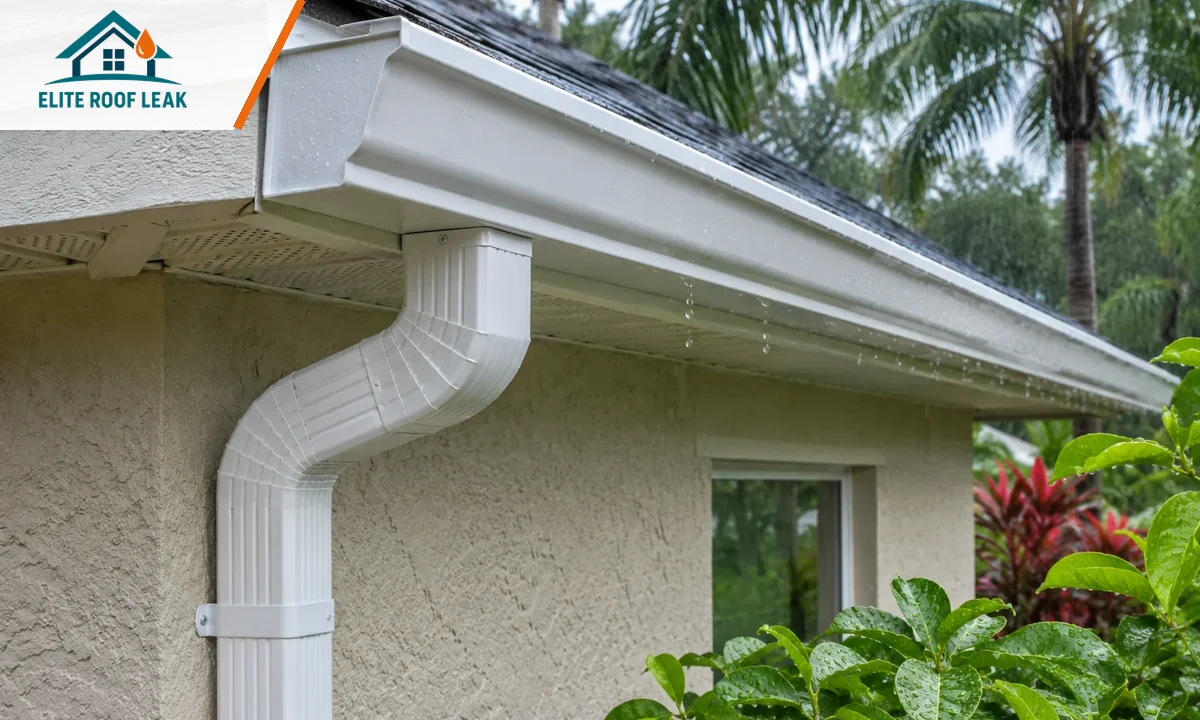
Gutters can overflow when a section or downspout is restricted, when runoff concentrates at one point, or when the system is poorly positioned for how the roof drains. Watch where the water first escapes from a safe place.
Watch where the overflow begins
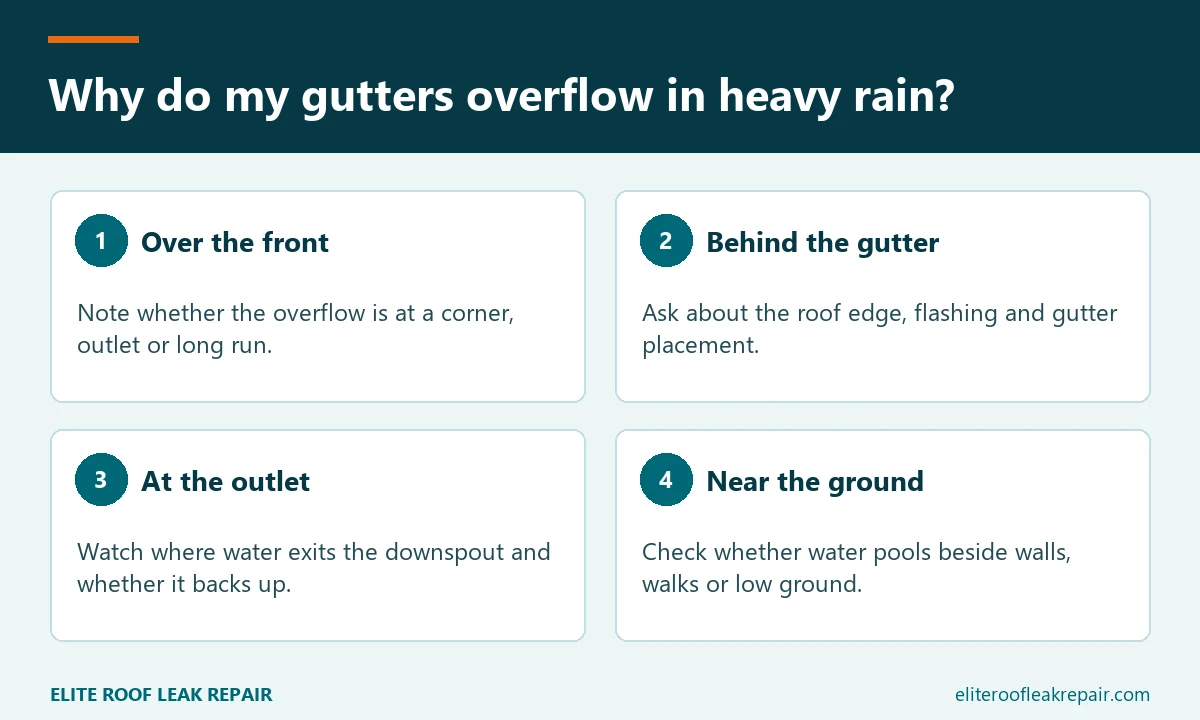
From a sheltered spot at ground level, find the first place water leaves the gutter. Water might roll over the lip by a corner, spill where a valley meets the edge or escape from a joint. It can also run between the gutter and the fascia. Those patterns point to different parts of the system.
Make a note of how quickly the problem appears. Overflow immediately after a burst of rain can look different from water that builds up after several minutes. If you have a safe view of the downspout outlet from the ground, check whether water is coming out at the same time. A video can help a roofer see the relationship among the roof, gutter and outlet. Capture only what you can see without climbing or entering an unsafe area.
Follow the runoff from the roof to the gutter
The roof does not always send water evenly along its edge. A valley gathers runoff from two surfaces and can deliver it into one short stretch of gutter. A higher roof can also direct water onto a lower roof. If the problem happens consistently where several surfaces drain together, ask how the collection system accommodates that concentrated flow.
The entry of water into the gutter matters as much as the path through it. A problem at the roof edge can allow water behind the gutter, and a gutter set too far from a flow path may miss the runoff. Describe the position of the stream compared with the lip. Tell the team whether the problem started after a new roof, a change to gutter guards or work at the fascia.
Check whether the downspout is carrying water away
Downspouts carry water from the gutter to an outlet. If a gutter is overflowing above a downspout and there is little discharge below, the opening, elbow or connecting line may need attention. A buried drain connected to the downspout can also affect how the system behaves. Point out any section the roofer cannot see from ground level, such as a pipe under a path.
During the visit, ask where the team observed a restriction and what must be checked to rule out a downstream issue. Clearing an opening at the top can help when leaves are gathered there. If the underground line is backing up, the investigation may need to include where the line ends or which part of the system is responsible for drainage after the downspout.
Look for evidence at the roof edge and fascia
From the ground, look for streaks behind a gutter, peeling finishes or staining below a joint. Photograph the side of the house so a roofer can compare the affected area with the roof edge above it. Water running down an exterior wall can wet materials outside the fascia and affect nearby windows and trim.
Ask whether the wetting comes from overflow, a leaking connection, a roof-edge detail or a separate issue. If a small section must come down for inspection, ask what adjacent materials are likely to need attention and how the condition will be documented. Discuss whether an approved repair may affect flashing or roofing at that edge. A new gutter can do its job when the roof ties into it correctly and the outlet is clear.
Check the water’s path after it leaves the downspout
A functioning gutter can still discharge into a poor location. Watch where water travels once it hits the ground. Look for a stream crossing a walkway, an outlet directly beside a wall or a low spot that holds water after the storm. Tell the team about buried drainage routes, garden beds and any surface that slopes back toward the house.
The Building America Solution Center explains how gutters and downspouts connect to a broader water-management system. Ask how the current outlet fits that system. The right solution depends on the slope, available space, property boundaries and other drainage features. A change to a discharge location should leave water with a clear path and avoid creating another problem for the property or surrounding area.
Compare cleaning, corrections and replacement
A useful proposal identifies the observed cause and what the crew will do about it. Cleaning may address a restriction when the rest of the system is in usable condition. Correcting a section can make sense where it is loose or has poor drainage. A larger replacement may be worth comparing if several runs, hangers, joints or outlets are failing.
Check which items are included. Ask about gutter sections, downspouts, outlets, extensions and any adjoining roof-edge work. Confirm the proposed outlet location and how the contractor will handle hidden damage to the support behind the gutter. Review the finished work from ground level. Once the next rain comes, see whether the same area drains differently and tell the team where water still collects.
Describe the issue in one useful sentence
Give the local team your ZIP code and a concrete description. You might say the gutter spills over the front below the upper valley during a heavy shower and the nearest downspout releases little water. A statement like that helps the team ask about the right components before setting an appointment.
Bring photos of the roof edge and the bottom of the downspout if you have them. Mention recent changes such as a new roof, redesigned landscaping or a replaced gutter section. If you have observed water in more than one place, describe the sequence and collect a separate photo for each spot. One rain video plus a few notes can be more useful than a guess about the cause.
Note which changes affected the problem
If the overflow started after one repair or landscaping project, add that date to your notes. Compare photos before and after the change if you have them. A new outlet, shifted gutter or raised planting bed can alter the route water takes even when the roofing surface itself looks unchanged.
Building America Solution Center guidance on gutters and downspouts ↗
Questions about this guide
01Can a clean gutter still overflow?+
Yes. Flow concentration, placement, pitch or the size and number of outlets can affect performance.
02What does water behind the gutter suggest?+
Ask the roofer to compare the roof edge, fascia, gutter placement and any paths that allow runoff to bypass the gutter.
03Why is there little water at the downspout outlet?+
A restriction can occur at the outlet, elbow or drain line. The overflow and outlet need to be evaluated together.
04Can gutter work include downspouts?+
Yes. Ask the team to write out which outlets, downspouts and connecting sections the proposal includes.
05How can I document overflow safely?+
Take a video from a protected spot on the ground and describe the starting point, rain intensity and discharge location.